Rough and finish grading
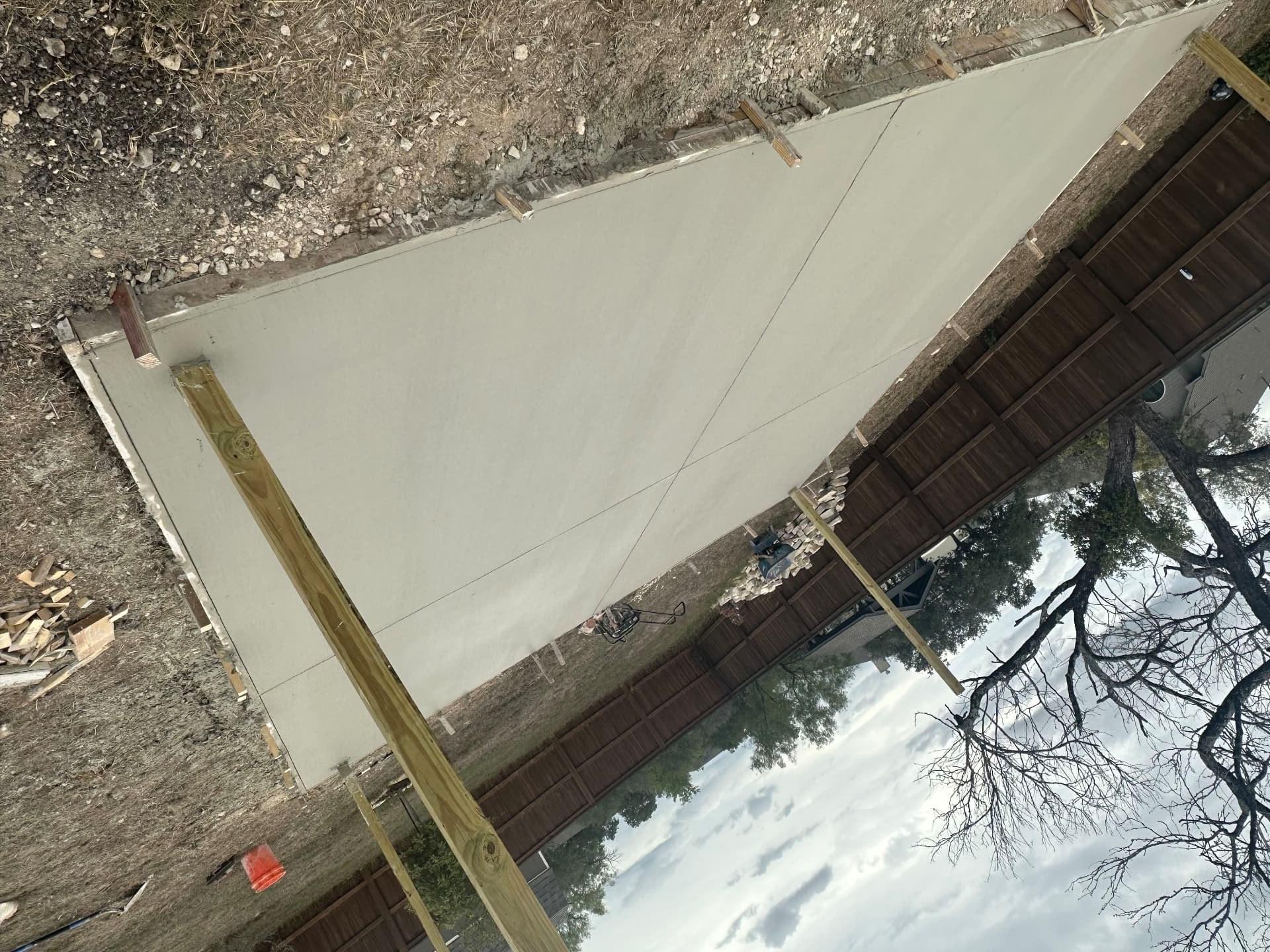
Rough grading for pads and lots, then finish grade shot to tolerance for slabs and flatwork.
Grading decides where water goes for the life of the property. We set finish grade with a laser, compact to the target, and walk the drainage with you before anything gets poured on top of it.
Most quotes back in 24 hours.
Rough grading for pads and lots, then finish grade shot to tolerance for slabs and flatwork.
Sheepsfoot, padfoot, or smooth drum matched to soil type, compacted to the specified density.
Positive drainage, swales, and berms that carry water away from foundations and neighbors.
Every pad gets proof-rolled before base or forms. Soft spots get dug out and rebuilt instead of poured over.
If a geotech report exists, we build to it and hand back the documentation you will need at inspection.
Grading decides where water goes for the entire life of a property. Every slab, driveway, foundation and yard depends on the ground being shaped so runoff moves away from structures and toward somewhere it can leave. Get it right and you never think about it again. Get it wrong and you're dealing with standing water, soggy yards and moisture against a foundation permanently.
We provide rough and finish grading, compaction, drainage shaping and pad preparation for homeowners, builders and commercial property owners across the San Antonio area. That covers grading building pads and lots, finish grade for slabs and flatwork, correcting yards that hold water, cutting swales and berms, and compacting fill to a specified density.
Grading and compaction go together because shaping the ground is only half the job. Ground that's the right shape but not compacted will settle out of shape, and then you're back where you started with water pooling in the low spot that formed.
Often handled alongside excavation services in San Antonio, concrete foundations in San Antonio and concrete slab installation in San Antonio.
Positive drainage around a structure is the single most effective thing you can do to protect a foundation over the long term.
Low spots that hold water after every rain kill grass, breed mosquitoes and make sections of a yard unusable.
Slabs, patios and driveways poured on a properly graded and compacted pad stay where they were placed instead of settling into a dip.
Shaped slopes and swales carry water in a controlled path instead of letting it cut channels across the property.
Drainage that dumps onto adjacent property causes disputes. Grading with the whole site in mind avoids that.
Finish grade shot to tolerance and compacted to target means the concrete crew can form and pour without rework.
Seeing where water actually goes beats guessing from dry ground. We look at the low spots, the discharge points and where runoff is coming from.
We measure current grade so the plan is based on real numbers, including how much fall is available to work with.
You get the shaping approach, any swales or berms, fill quantities and compaction targets in writing before work starts.
The site is cut and filled toward design shape, with material moved and placed in controlled lifts rather than dozed into place loose.
Equipment matched to the soil type — sheepsfoot, padfoot or smooth drum — compacts each lift to the specified density.
Finish grade is set with a laser to tolerance, drainage paths are walked with you, and pads are proof-rolled before they're turned over.
Most drainage problems around here aren't caused by a lack of skill — they're caused by a lack of fall. On a flat lot with only a few inches of elevation change from the house to the property line, there's a limited amount that shaping alone can accomplish, and pretending otherwise leads to a regrade that doesn't fix anything.
When there isn't enough fall, the honest answer usually involves adding something: a swale to concentrate the flow, a French drain or area drains to collect water and pipe it out, or building the pad up rather than trying to cut the yard down. We measure the available fall first and then tell you what's realistically achievable, including when the fix is bigger than a grading job.
What we look at on a drainage and grading visit:
We grade lots, pads and yards across San Antonio and the surrounding communities, including Alamo Heights, Boerne, Bulverde, Helotes, Schertz, Cibolo, Converse and New Braunfels.
The rainfall pattern in this region is what makes grading so consequential. Long dry stretches are broken by storms that drop a lot of water in a short time, and a yard that drains fine in a light rain can hold water for days after a heavy one. We plan for the heavy event, not the average.
Clay soil adds a second factor. It absorbs water slowly and holds it, so surface shaping matters more than it would on sandy ground, and in some cases surface grading alone won't be enough without adding subsurface drainage. We'll tell you which situation you're in rather than selling a regrade that won't solve the problem.
Sometimes on its own, and sometimes only as part of a solution. It depends on how much fall is available and where the water can be sent. We measure elevations first and tell you honestly what grading alone can accomplish.
Rough grading moves the bulk of the material to get close to design shape. Finish grading sets the final surface to tolerance — the tight work required before pouring flatwork or laying sod.
Density testing by a lab is the definitive answer on engineered work. Practically, proof-rolling reveals soft spots. Fill that was dumped and left loose will settle, and that usually shows up as low spots or cracked concrete later.
It can, which is why we look at the whole drainage picture rather than just moving water off your lot. The goal is to route runoff to an appropriate discharge point, not shift the problem next door.
Yes. When surface grading alone can't solve a drainage problem, subsurface drainage collects water and pipes it to a discharge point. We'll recommend it when the site genuinely needs it.
Usually right away once finish grade is set and compaction is verified. Timing depends mostly on soil moisture — work can be delayed if the ground is too wet to compact properly.
Tell us where the water is going wrong, or what pad you need built. We'll come out, shoot elevations, look at the drainage picture and give you a written estimate for the grading and compaction work.
Tell us what you are building in the San Antonio area. We will walk the site, check soil, drainage, and access, and send a written scope you can actually compare against other bids.
Pick a time that works for you. We will come measure the site, check drainage and access, and send a written quote.