Cut-and-replace panels
Saw-cut removal of failed sections and a doweled replacement pour that ties to the existing slab.
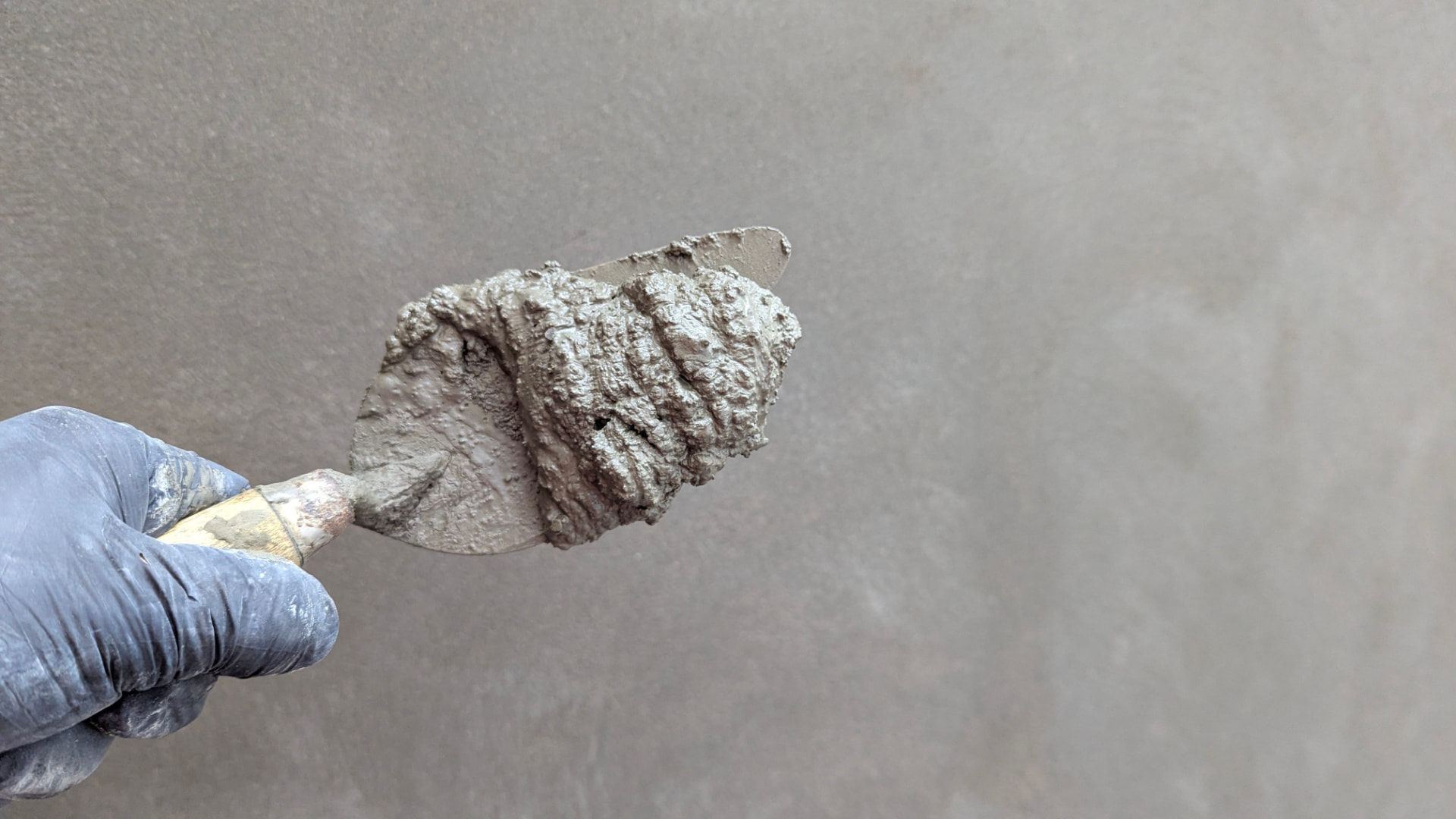
Not every crack is a problem, and not every problem can be patched. We look at what moved and why before quoting, because repairing the surface without fixing the cause just resets the clock.
Most quotes back in 24 hours.
Saw-cut removal of failed sections and a doweled replacement pour that ties to the existing slab.
Lifting and re-supporting settled walk and drive panels where the slab itself is still sound.
Surface repair, joint sealant replacement, and edge rebuilds on curbs and steps.
If more than roughly a third of a slab is compromised, replacement usually costs less over five years than chasing patches.
Drainage, a leaking line, or missing compaction is behind most repeat failures. We look for it before we quote the concrete.
Concrete cracks. That alone doesn't mean something is wrong. Hairline cracks at joints and shrinkage lines are normal and usually cosmetic. What matters is whether something moved, whether water is getting somewhere it shouldn't, and whether the surface has become a hazard.
We handle concrete repair for homeowners and property managers across San Antonio — cut-and-replace of failed driveway and walkway panels, settled slab sections, spalling and flaking surfaces, broken edges and steps, joint sealant replacement, and repairs to curbs and aprons.
The honest part of our job on repair calls is telling you when repair isn't the right answer. Patching the surface of a slab that's moving because of a drainage problem or loose fill underneath just resets the clock — you'll be looking at the same failure again in a couple of seasons. We look for the cause first and give you a straight recommendation, even when that recommendation is smaller than the job you called about.
Often handled alongside concrete driveway installation in San Antonio, concrete foundations in San Antonio and trenching services in San Antonio.
A lifted panel or broken edge is the most common source of falls on residential and commercial property. Fixing it is cheap compared to a claim.
Water entering an open crack or failed joint undermines the base underneath and works on the surrounding concrete freeze-thaw cycle after cycle.
Drainage problems that damage a slab don't stop at the slab. Water running the wrong direction eventually reaches the foundation or the garage.
When the surrounding slab is still sound, replacing the failed sections is a fraction of the price of tearing out the whole thing.
Spalled, stained and cracked concrete makes an otherwise maintained property look neglected — especially in a driveway or entry walk.
Concrete defects show up in inspections and walkthroughs. Handling them ahead of time removes a negotiating point.
We check drainage, joints, nearby water sources and how the slab is moving. Repairing the symptom without finding the cause is why repairs fail twice.
You get an honest call on repair versus replacement, including what we'd expect to happen if you wait. If a repair only buys a year, we'll say so.
The estimate spells out which sections get removed, what's being replaced, and what's being sealed or resurfaced.
Sections are saw-cut at clean lines — usually at existing joints — so the repair reads as a panel replacement rather than a patch.
Loose or washed-out base is rebuilt and compacted, and drainage issues are corrected before new concrete goes down.
New concrete is doweled to the existing slab where appropriate, finished to match the surrounding texture as closely as possible, jointed and cured.
There's no single rule, but a few questions get you most of the way to the answer. How much of the surface is affected? Is the concrete still structurally sound, or is it breaking down? Is the underlying cause fixable without removing the slab? And how long do you plan to keep the property?
Repair usually makes sense when the damage is contained — a couple of panels, an edge, a settled section — and the rest of the slab is solid. Replacement usually makes more sense when failures are showing up in multiple areas, when the surface itself is deteriorating across the slab, or when the concrete is too thin or unreinforced for what's being parked on it. Chasing patches across a slab that's fundamentally undersized costs more over a few years than doing it once.
Things we look at on a repair visit:
We take repair calls throughout San Antonio and nearby communities including Alamo Heights, Boerne, Helotes, Schertz, Cibolo, Converse, Universal City, New Braunfels and the surrounding area.
A lot of the repair work in this region traces back to soil movement. Much of the area sits on clay that expands when it's wet and shrinks when it's dry, and slabs poured on poorly compacted or unstable ground move with it. That's why we spend time on what's under the concrete before quoting the concrete itself.
Drainage is the second recurring theme. Long dry stretches followed by heavy rain move a lot of water fast, and any place where roof runoff or irrigation dumps against a slab edge tends to be exactly where the failure shows up. Fixing that is often a bigger part of a durable repair than the concrete work.
Not necessarily. Thin, stable cracks — especially at or near control joints — are normal. Cracks that are widening, holding water, or have one side sitting higher than the other are worth having looked at.
Yes, when the surrounding concrete is sound. The failed section is saw-cut out and replaced, doweled into the adjacent slab where appropriate so the panels move together.
It won't match exactly. New concrete is a different age and cures to a different shade, and it typically lightens over time. We match the finish texture and joint lines as closely as we can and tell you up front what to expect.
Sometimes. If the slab itself is still in good condition and the problem is the support under it, lifting and re-supporting can be an option. If the concrete is cracked apart, replacement is usually the better spend.
Surface flaking and pitting generally point to something that happened at the surface — how it was finished, cured or treated. We look at the extent of it to decide whether a resurfacing approach is realistic or whether replacement is the honest answer.
It comes down to how much of the slab is affected, whether the cause is fixable, and how the slab is being used. We'll walk it with you and give you a recommendation with the reasoning behind it, not just a price.
Send us photos or tell us what you're seeing — cracks, settling, flaking or broken edges. We'll come look at it, find out what caused it, and give you a written estimate along with a straight recommendation on repair versus replacement.
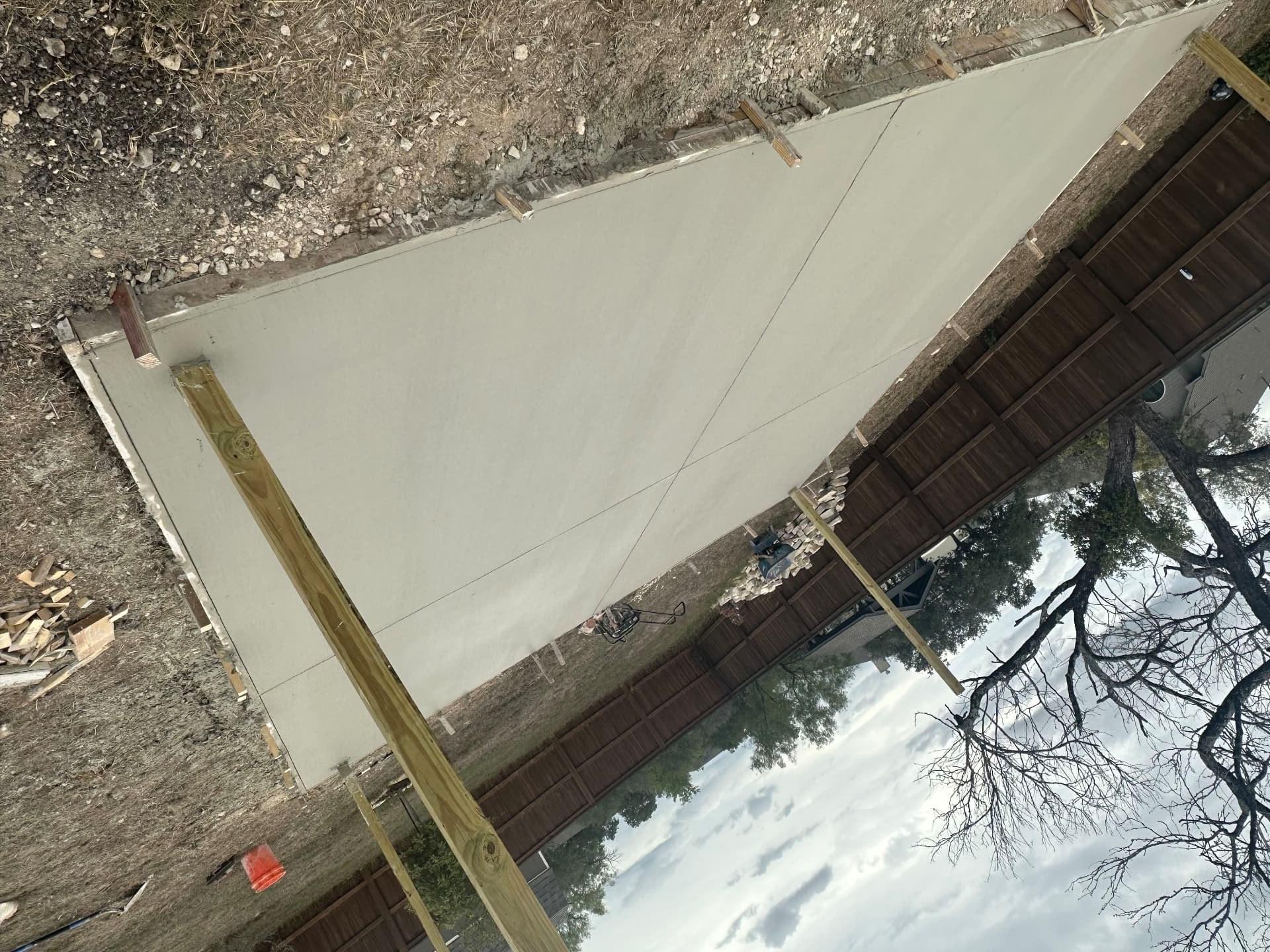
Tell us what you are building in the San Antonio area. We will walk the site, check soil, drainage, and access, and send a written scope you can actually compare against other bids.
Pick a time that works for you. We will come measure the site, check drainage and access, and send a written quote.