Utility and electrical trenching
Conduit and service runs at code depth with sand bedding where required.
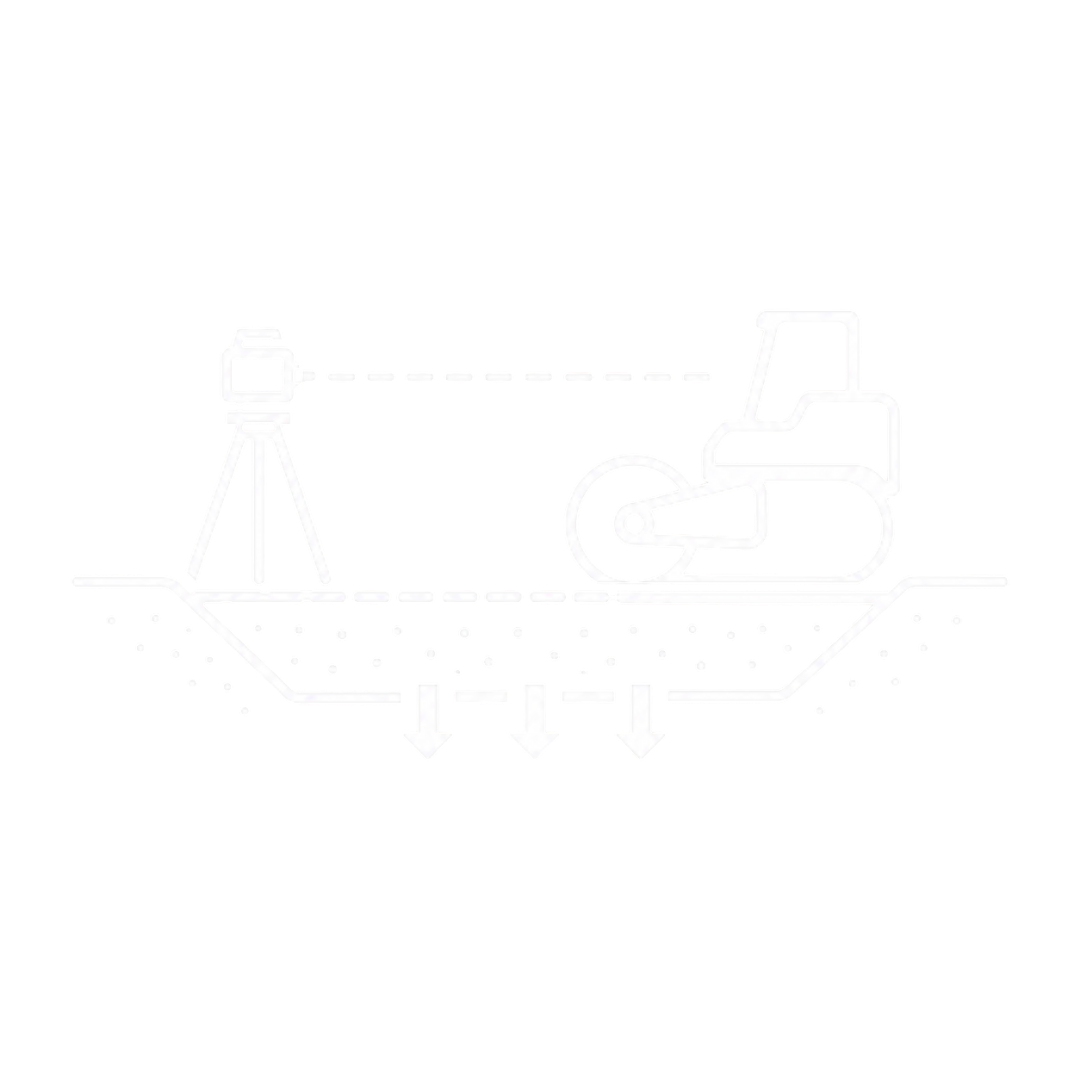
Trenching is where the schedule gets saved or lost. Lines get located first, trenches get cut to depth and line, and backfill gets compacted in lifts so the ground above them does not settle later.
Most quotes back in 24 hours.
Conduit and service runs at code depth with sand bedding where required.
Water, sewer, and gas trenches cut to the plumber's grade requirements.
Grade beam trenches, French drains, and area drain runs.
Backfill placed in lifts and compacted, not dozed back in loose. Loose trench backfill under a slab or drive is a guaranteed crack line.
Limestone shows up shallow across much of the metro. We bring the right breaker so a rock trench does not stall your job for a week.
Trenching is the part of a project nobody sees once it's finished, and the part that causes the most trouble when it's rushed. Every utility line, drain, water service and footing has to get into the ground at the right depth, on the right line, with backfill that won't settle later and leave a trough across the yard or a crack across a slab.
We cut trenches across the San Antonio area for electrical and utility conduit, water and sewer lines, gas service, irrigation, drainage runs and French drains, and footing and grade beam excavation for foundations and retaining walls.
The two things that decide whether a trench job goes smoothly are locating what's already down there and knowing what the ground is going to do. Existing lines get located before a machine starts, and where rock shows up we bring equipment that can get through it rather than letting the schedule stall for a week.
Often handled alongside excavation services in San Antonio, site grading and compaction in San Antonio and concrete foundations in San Antonio.
Utilities and services have depth requirements. A trench that's too shallow either gets rejected at inspection or gets damaged later.
Locating before digging avoids the expensive, sometimes dangerous problem of putting a bucket through a gas, water or fiber line.
Backfill placed and compacted in lifts keeps the ground from sinking above the trench — the difference between a flat yard and a permanent trench line.
Shallow limestone is common in this area. Having the right breaker on site keeps a rock trench from turning into a week of delay.
Plumbers and electricians work faster and safer in a trench cut straight, to grade, and with a stable bottom.
Planned access, spoil placement and cleanup mean the yard doesn't come out looking like a construction site.
We agree on the trench route with you, then get existing utilities located before any equipment moves. Nothing gets dug on assumption.
Linear footage, depth, width, bedding and backfill requirements, plus whether rock is likely, all priced in writing.
We plan machine access and where spoil goes, and protect the areas of the property that need to stay intact.
The trench is cut to the depth and grade the installation requires — including consistent fall on drainage and sewer runs.
Sand or select bedding is placed where required, and we coordinate timing with your plumber, electrician or drainage installer so nobody waits on the other.
Backfill goes in in lifts and gets compacted, the surface is restored to grade, and the site is cleaned up.
A trench is a hole you filled back in, and how it was filled determines what the ground above it does for years. Backfill that's simply pushed back in loose will consolidate on its own schedule — usually after the first heavy rain — and you end up with a sunken line running across the yard, or worse, under a driveway or slab that then cracks along the same line.
Compacting in lifts takes longer and costs a little more. It's also the only way to make sure the surface above the trench stays where you put it. If a trench crosses a future driveway, walkway or slab, that step isn't optional.
Things worth deciding before the trench is cut:
We trench for residential, commercial and builder clients across San Antonio and out into Boerne, Bulverde, Helotes, Schertz, Cibolo, Converse, New Braunfels and rural properties in the surrounding counties.
Limestone is the recurring variable in this region. In some areas rock sits within a couple of feet of the surface, and a trench that would take an afternoon in soil becomes a different job entirely. We check what we're likely to hit before quoting and bring the equipment for it.
On acreage properties, trench runs are often long — service from a road to a house or shop can be hundreds of feet. Route planning around trees, drives and existing lines makes a real difference in both cost and how the property looks afterward.
Yes. Existing utilities are located before any equipment breaks ground. On private lines that aren't part of public locating services, we discuss what's known about the property with you first.
It depends on what's going in it. Electrical, water, sewer, gas and drainage all have different depth requirements, and sewer and drainage also need consistent fall. We cut to the depth the installation and any applicable code requires.
Rock is common in parts of this area. We bring breaking equipment when the site indicates it's likely. If rock is encountered unexpectedly, we talk with you about the impact before proceeding rather than surprising you on the invoice.
Not if the backfill is placed and compacted in lifts. Loose backfill is the reason trench lines settle, and it's the step that gets skipped when a job is being done cheap and fast.
Usually yes, with the right size machine and careful work. We'll look at clearances during the site visit and tell you if hand work or a smaller machine is needed in tight spots.
Yes. We schedule the trench so the installing trade can work right after it's open, and we backfill once their inspection is cleared, so the trench isn't sitting open longer than it needs to be.
Tell us the route, roughly how far it runs, and what's going in the trench. We'll come out, look at access and likely ground conditions, and give you a written estimate.
Tell us what you are building in the San Antonio area. We will walk the site, check soil, drainage, and access, and send a written scope you can actually compare against other bids.
Pick a time that works for you. We will come measure the site, check drainage and access, and send a written quote.