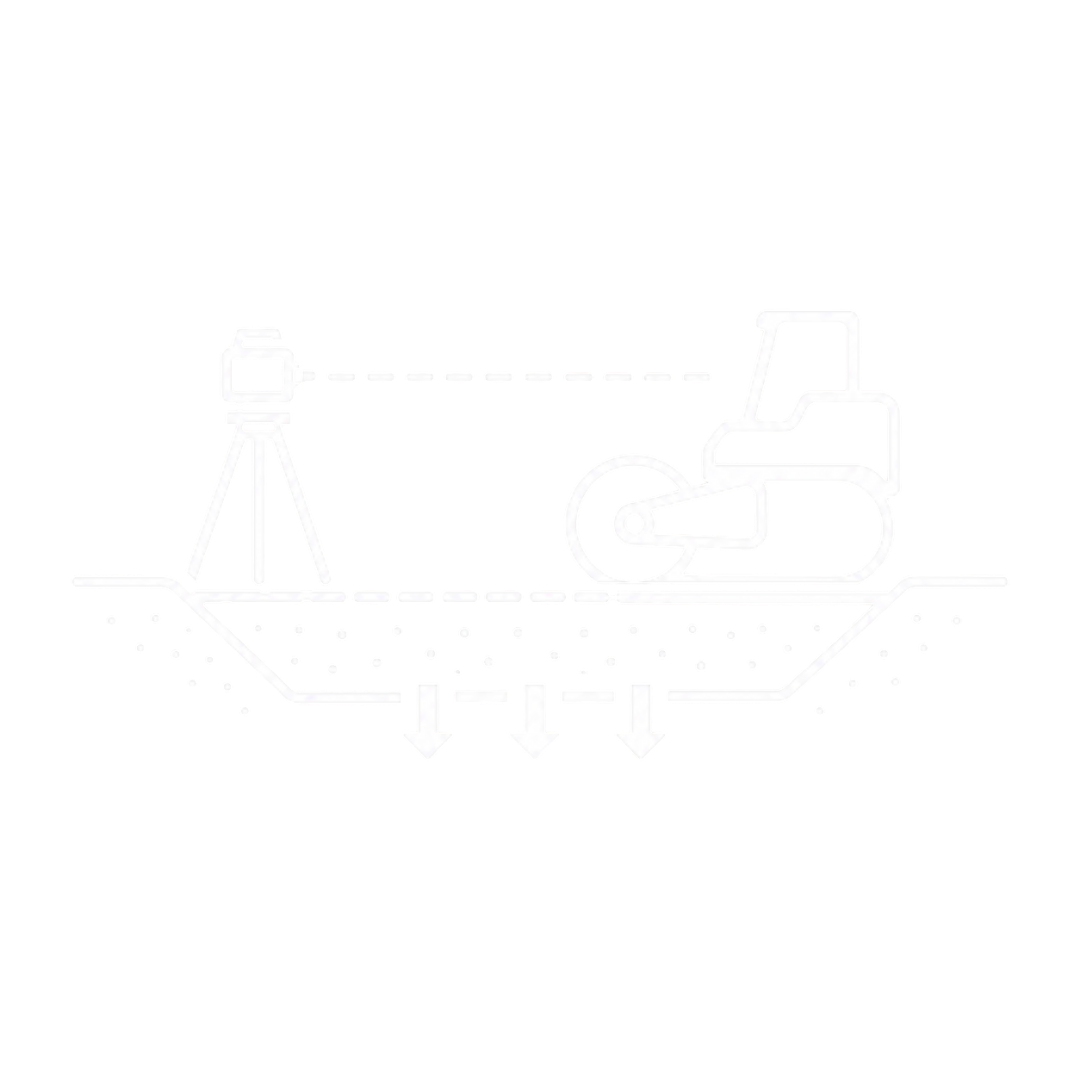
Cut and fill
Bulk earthwork to design elevations with balanced haul where the site allows.
Excavation is how a building pad gets built, not just how dirt gets moved. Bad soil comes out, select fill goes back in lifts, and the pad gets proof-rolled before anybody talks about forms.
Most quotes back in 24 hours.
Bulk earthwork to design elevations with balanced haul where the site allows.
Removal of unsuitable clay and replacement with select fill compacted in lifts.
Pad construction for slabs, shops, and additions, plus footing and pier excavation.
Fill placed at the right moisture in controlled lifts. Dry-dumped fill never reaches density no matter how many passes it gets.
On engineered jobs we coordinate density testing so results are on file before the pour.
Excavation is how a building pad gets built, not just how dirt gets moved. Cutting to grade is the easy half. The half that determines whether anything you build on top of it performs is what happens to the material that goes back in — where it comes from, how wet it is, and how it's compacted.
We handle excavation for residential, commercial and builder projects across San Antonio, including cut and fill to design elevations, building pad construction, over-excavation of unsuitable soil, select fill placement, footing and pier excavation, pond and drainage excavation, and rock removal.
The reason we take pad work seriously is simple: almost every slab problem we're later asked to repair started as a dirt problem. A soft spot, a poorly compacted lift, or fill placed too dry shows up as a crack in the concrete a year or two later — and by then it's an expensive fix.
Often handled alongside site grading and compaction in San Antonio, trenching services in San Antonio and concrete foundations in San Antonio.
Select fill placed in controlled lifts and compacted to target gives the slab above it uniform support instead of soft spots.
Over-excavating unsuitable material and replacing it is the difference between fixing a problem and covering it up.
Building to design grade means finished floor elevations, drainage and tie-ins all land where the plan says they should.
Shaping the site during excavation is far cheaper than trying to fix water problems after everything is built.
A pad that's proof-rolled and ready keeps the concrete, plumbing and framing crews on schedule.
On engineered projects, coordinating density testing means results are on file before the pour, not argued about after.
We work from the plan elevations and any soils report, and we look at existing grade, drainage and access before pricing.
Cut and fill quantities, select fill needs, haul-off, compaction targets and testing coordination, all documented up front.
Topsoil and organics are stripped and stockpiled or hauled, and the site is cut toward design elevation.
Unsuitable material is dug out to firm ground rather than being compacted in place and hoped for.
Select fill goes in at proper moisture in controlled lift thicknesses and each lift is compacted to the specified density.
The finished pad is proof-rolled, soft spots are dug out and rebuilt, and the pad is turned over at grade and ready for forms.
Compaction isn't about how many passes a roller makes. It's about placing the fill at the right moisture content and in thin enough lifts that the compaction energy actually reaches the bottom of the layer. Dry-dumped fill in thick lifts will never reach density, no matter how long a machine drives over it, and no amount of surface smoothness hides that from the slab above.
That's also why we proof-roll before turning a pad over. Driving a loaded truck across the finished pad reveals the soft areas that look identical to good ground from the surface. It's a cheap test that prevents an expensive slab repair.
Excavation details worth understanding on your project:
We handle excavation and pad building across San Antonio and the surrounding communities, including Boerne, Bulverde, Helotes, Schertz, Cibolo, La Vernia, New Braunfels and rural sites throughout the region.
Ground conditions in this area vary dramatically over short distances. One site is deep expansive clay that needs over-excavation and select fill; another a few miles away hits limestone within a couple of feet of the surface and needs breaking. Both change the scope significantly, which is why we evaluate the actual site rather than pricing off acreage.
Moisture timing is a real scheduling factor here too. Clay that's too wet can't be compacted, and after a heavy rain a site may need days to dry before fill work can continue. We build that reality into the schedule instead of promising dates the weather won't allow.
Select fill is imported material chosen because it compacts well and behaves predictably. It's used to replace soil that's too soft, too organic or too expansive to build on, so the pad supports the structure uniformly.
Yes. Shallow limestone is common in parts of this area, and we bring breaking equipment when the site indicates it's needed. If rock shows up unexpectedly, we talk through the impact with you before continuing.
On engineered projects, a testing lab performs density tests at specified intervals and provides written results. On smaller projects, proof-rolling the pad is the practical check. We'll tell you which applies to your job.
Usually. Slope and access affect equipment choice, haul routes and cost, so we look at both during the site visit and include what the site actually requires in the estimate.
It depends on the site. Sometimes material can be reused elsewhere on the property to balance the job, which saves money. Otherwise it's loaded out and hauled to an appropriate disposal site.
It's driven by volume, soil type, whether rock is present, haul distance, access and whether select fill needs to be imported. We price from the plan and the site conditions rather than a per-yard guess.
Send us your plans or tell us what you're building and where. We'll evaluate the site, look at soil and access, and give you a written estimate covering cut, fill, compaction and haul.
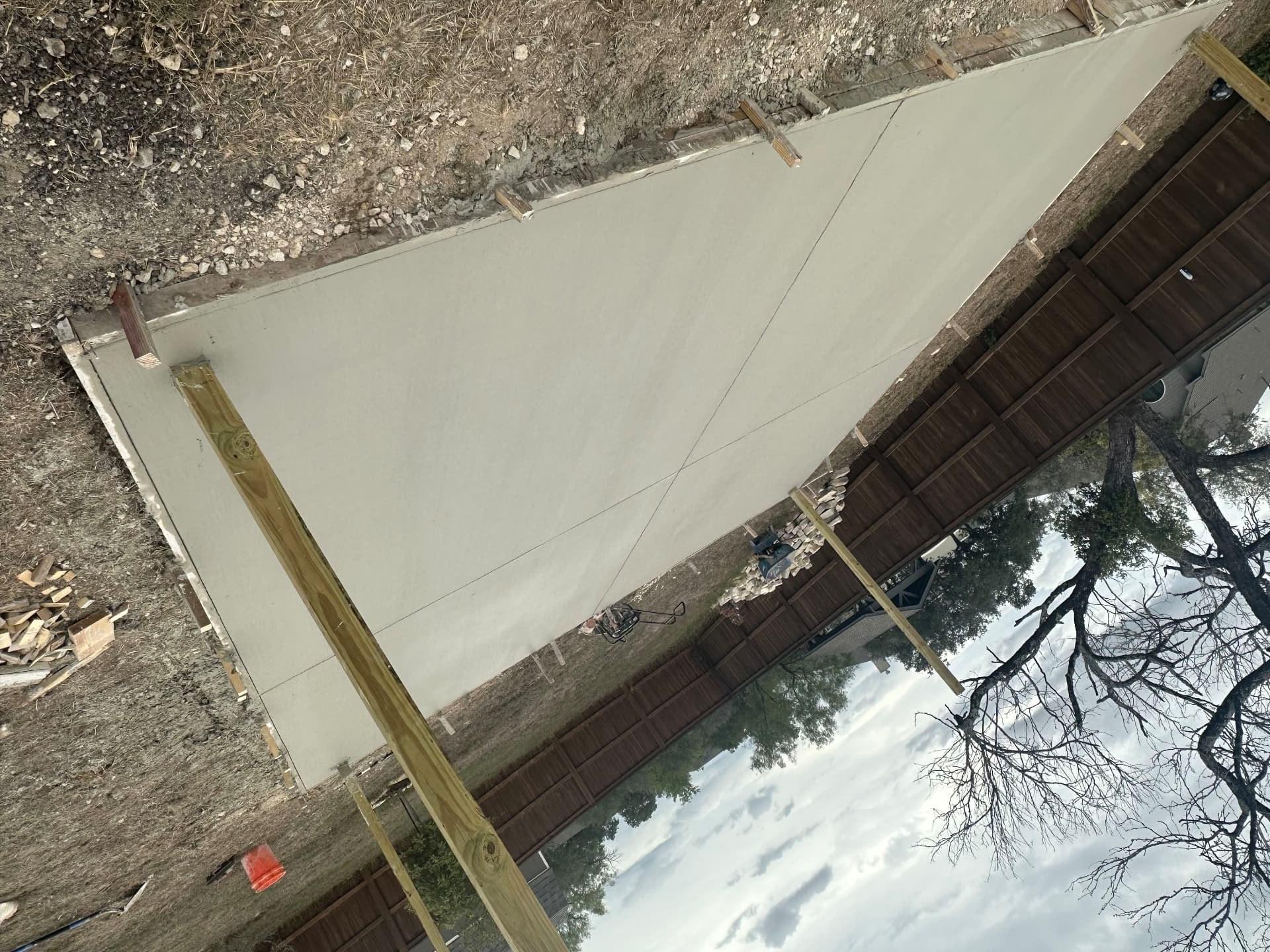
Tell us what you are building in the San Antonio area. We will walk the site, check soil, drainage, and access, and send a written scope you can actually compare against other bids.
Pick a time that works for you. We will come measure the site, check drainage and access, and send a written quote.