Demo & Haul Off
Old slab broken out, rubble loaded, and the pad cleaned down to native soil.
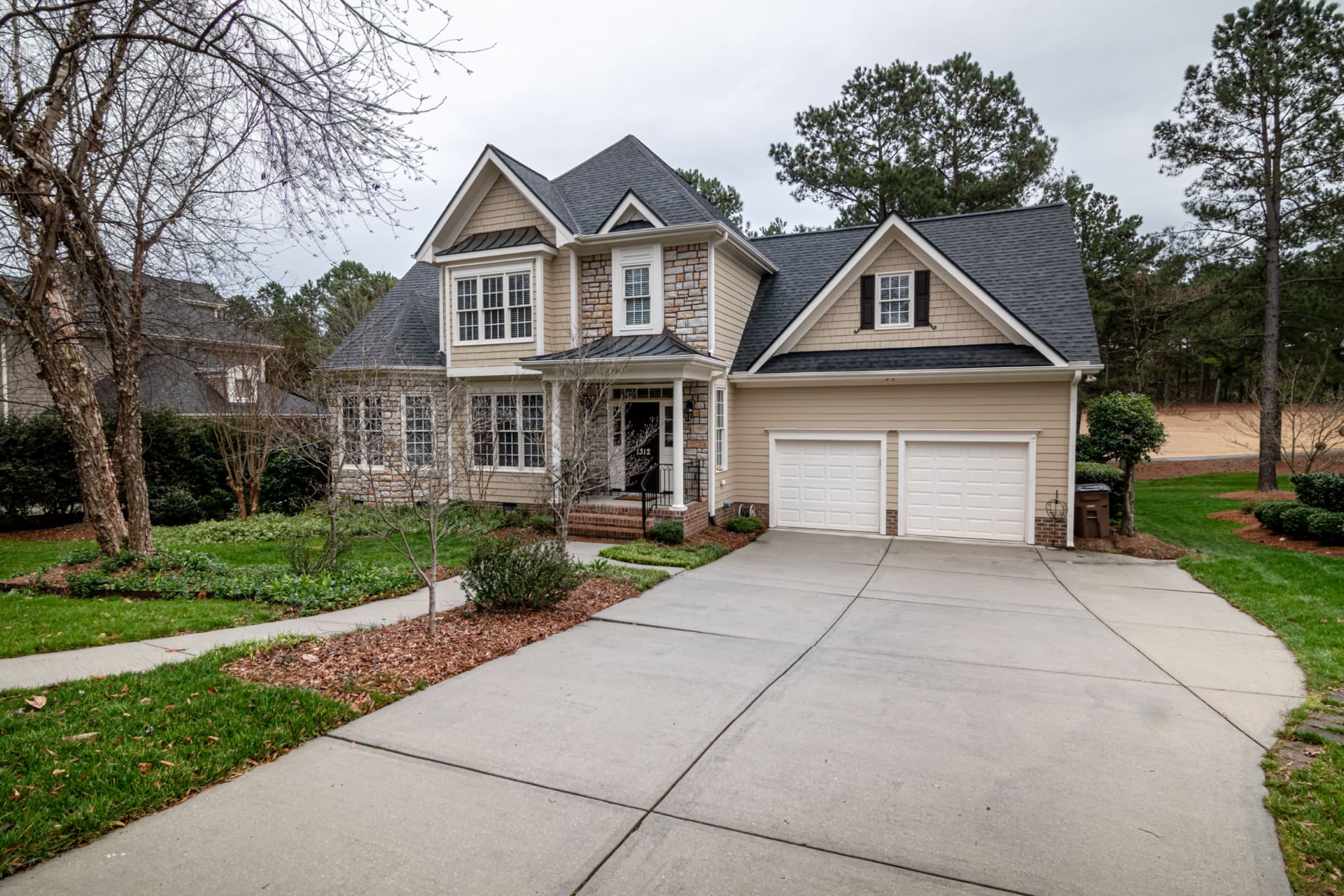
A driveway takes the heaviest repeated load on most properties: delivery trucks, trailers, and a garbage truck at the apron every week. We size the slab and the base for that reality instead of the minimum that looks fine on day one.
Most quotes back in 24 hours.
Most driveway failures start underground. Drag to rotate the model and step through the exact sequence our crews follow — demo, forms, compacted base, steel, pour, and finish.
Old slab broken out, rubble loaded, and the pad cleaned down to native soil.
Forms set and staked to line, with fall pulled away from the garage so water leaves.
Flex base spread in lifts and compacted — the step most low bids skip.
Rebar on chairs, then 3,500+ PSI concrete placed, screeded, and floated.
Broom finish for traction, control joints cut on spacing, edges tooled clean.
Demolition and haul-off of the old drive, new base, and a fresh reinforced pour with the finish you choose.
City-compliant approaches tied into the existing curb line and gutter flow.
Added parking strips and turnarounds doweled into the existing slab so the joint does not separate.
We set slope away from the garage and house before forms go in. Water that ponds against a slab edge is what undercuts it.
Broom finish is the workhorse for traction. Exposed aggregate, borders, and stamped bands are available if you want the drive to carry the curb appeal.
A concrete driveway is one of the few parts of a house that gets used hard every single day. Cars, work trucks, trailers, delivery vans and the trash truck at the curb all put weight on the same strip of concrete, year after year. When a driveway is built on a compacted base with the right thickness and reinforcement, it quietly does its job for decades. When it isn't, you start seeing cracks, sunken sections and crumbling edges long before you should.
We install new concrete driveways and replace failing ones for homeowners across San Antonio and the surrounding metro. That includes first-time driveways on new construction, tear-out and replacement of old concrete, widening a drive that never fit two vehicles, and building parking pads, turnarounds and RV strips off an existing drive.
Most people call us for one of two reasons: the driveway they have is falling apart, or the driveway they have doesn't fit how they actually live. Either way, the conversation starts the same — we come look at the site, talk through what you park on it, check how water moves across it, and give you a written number so you know exactly what you're paying for before anything gets torn out.
Often handled alongside concrete sidewalk and walkway installation in San Antonio, decorative and stamped concrete in San Antonio and concrete repair in San Antonio.
Concrete costs more up front than gravel or asphalt in most cases. Here's what you get for that difference.
A properly reinforced concrete drive carries loaded trucks, dual-axle trailers and RVs without rutting or pushing out at the edges the way gravel and asphalt do in Texas heat.
There's no sealcoating cycle to keep up with. Keeping joints sealed, water draining away and oil cleaned up is realistically the whole maintenance list.
The driveway is usually the largest single surface visible from the street. A clean broom finish with a scored border or a stamped band reads as finished instead of patched together.
Concrete doesn't soften and rut in the heat the way asphalt does through a South Texas summer, and light-colored concrete stays noticeably cooler underfoot.
Extra width for a third vehicle, a turnaround so you're not backing into the street, a side strip for a boat — all of it is decided at the forming stage, not after.
Concrete driveways are typically the last driveway a house gets for a very long stretch, which is a real consideration if you plan to stay put.
Not every crack means you need a new driveway. These are the situations where replacement usually makes more sense than another patch.
We walk the driveway with you, measure it, look at where water goes, and ask what you park. You get a written price with thickness, reinforcement and finish spelled out.
On a replacement, the old concrete is broken out and hauled away. On new construction, we clear and shape the area to the planned footprint.
The subgrade is graded and compacted, and base material is added where needed. This is the step that decides how the drive ages, and it's the one that gets skipped on cheap bids.
Forms are set to the finished shape and to the slope that carries water away from your garage and foundation. Rebar or mesh is tied and set up on chairs so the steel sits inside the slab, not underneath it.
Concrete is placed, screeded, floated and finished — usually a broom finish for traction, with edges tooled and any decorative border detailed.
Control joints get cut on the right spacing so the slab cracks where we tell it to. We cure the surface, clean up, and walk the finished drive with you before we leave.
Most of the driveway decisions that matter are made before the truck shows up. Thickness and reinforcement should be matched to the heaviest thing that will regularly sit on the slab — a drive that only sees two sedans and a drive that parks a dually and a car hauler are not the same build, even if they look identical from the street.
Layout is the other big one. Standard two-car width feels tight the moment someone has to walk between vehicles with groceries. If you have room, a few extra feet of width or a small turnaround usually costs less than you'd guess and changes how the house functions every day.
Finish is where the personality comes in without sacrificing traction:
We pour driveways throughout San Antonio and the surrounding communities, including Alamo Heights, Boerne, Helotes, Schertz, Converse, Cibolo, New Braunfels, Bulverde and the surrounding Bexar County area.
Two things shape driveway work here more than anything else. The first is soil movement — much of the region sits on clay that swells and shrinks with the wet and dry cycle, so base preparation and reinforcement matter more than they would on stable ground. The second is heat. Summer pours get scheduled for early in the day and the slab is cured properly rather than left to dry out fast, which is how you avoid a surface that crazes and dusts in the first year.
Driveway aprons that tie into a public street may fall under city requirements depending on your location. If your project touches the right-of-way, we'll tell you what's involved during the estimate rather than after.
A driveway built on a compacted base with proper thickness, reinforcement and drainage typically lasts for decades with only minor maintenance. Lifespan depends far more on what's under the slab and how water drains than on the concrete itself.
Concrete gains strength over time rather than all at once. We give you a specific timeline at the end of the job for foot traffic, passenger vehicles and heavy loads, since it depends on the mix, slab thickness and the weather during the pour.
In most cases, yes. We plan equipment access and material staging during the estimate and protect the areas that stay. On tight lots we'll walk the access route with you ahead of time so there are no surprises.
Price depends on square footage, slab thickness, reinforcement, whether there's an old drive to remove, site access, drainage work and the finish you pick. We don't quote sight-unseen — we measure the actual driveway and give you a written number.
Often yes. Widening strips are tied into the existing slab with dowels so the new section moves with the old one instead of separating. Whether widening is the right call depends on the condition of the concrete you already have.
All concrete cracks somewhere. The job of a good installation is to control where. Control joints cut on the correct spacing give the slab a planned place to relieve stress, so you get a clean line at a joint instead of a jagged crack across the middle.
Tell us the size of the driveway, what you park on it and whether there's existing concrete to remove. We'll come out, measure it, look at drainage and give you a written estimate for the work.
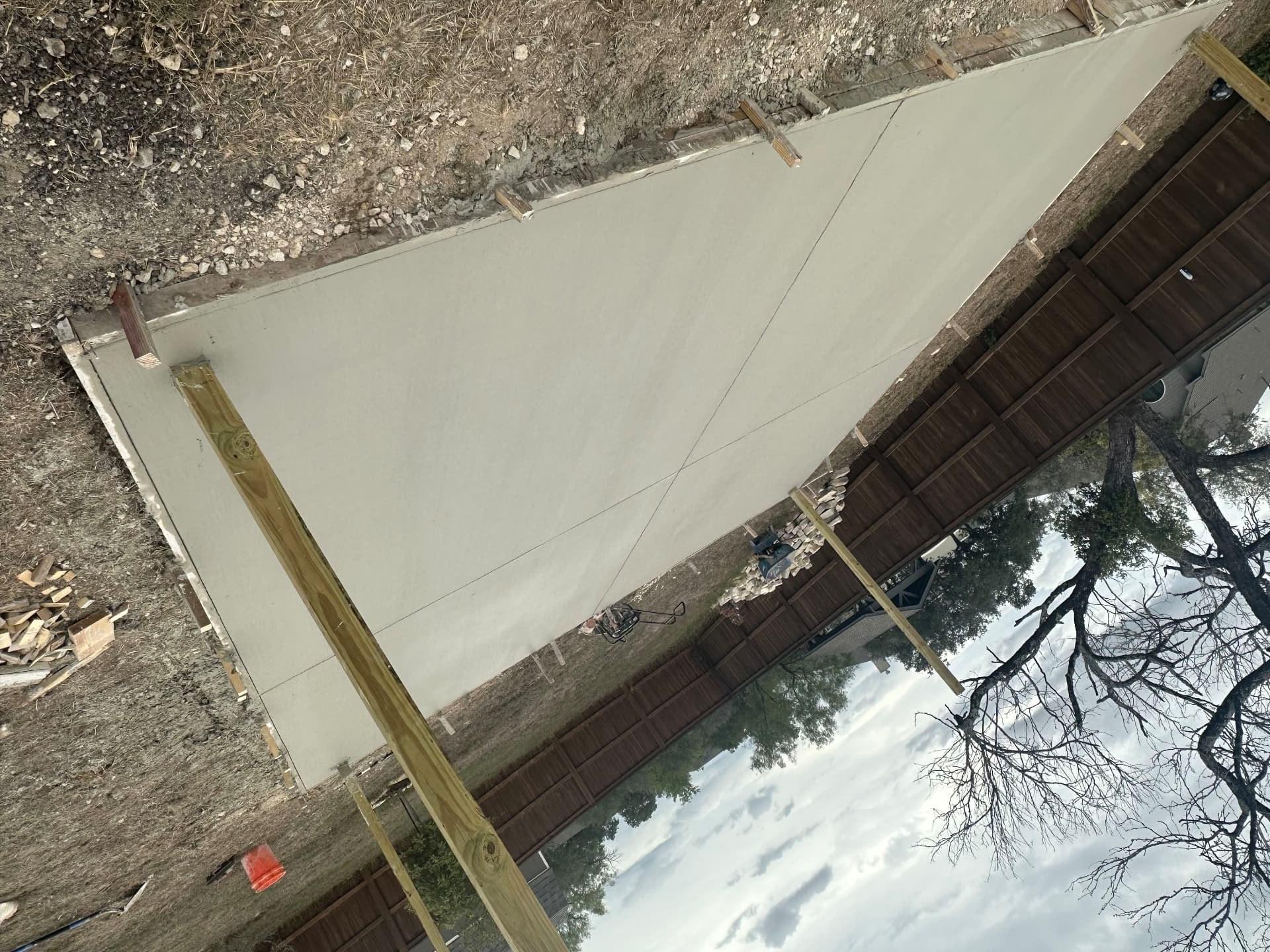
Tell us what you are building in the San Antonio area. We will walk the site, check soil, drainage, and access, and send a written scope you can actually compare against other bids.
Pick a time that works for you. We will come measure the site, check drainage and access, and send a written quote.