Mark the Path
The sidewalk route is staked or spray-painted so the line stays true to the plan.
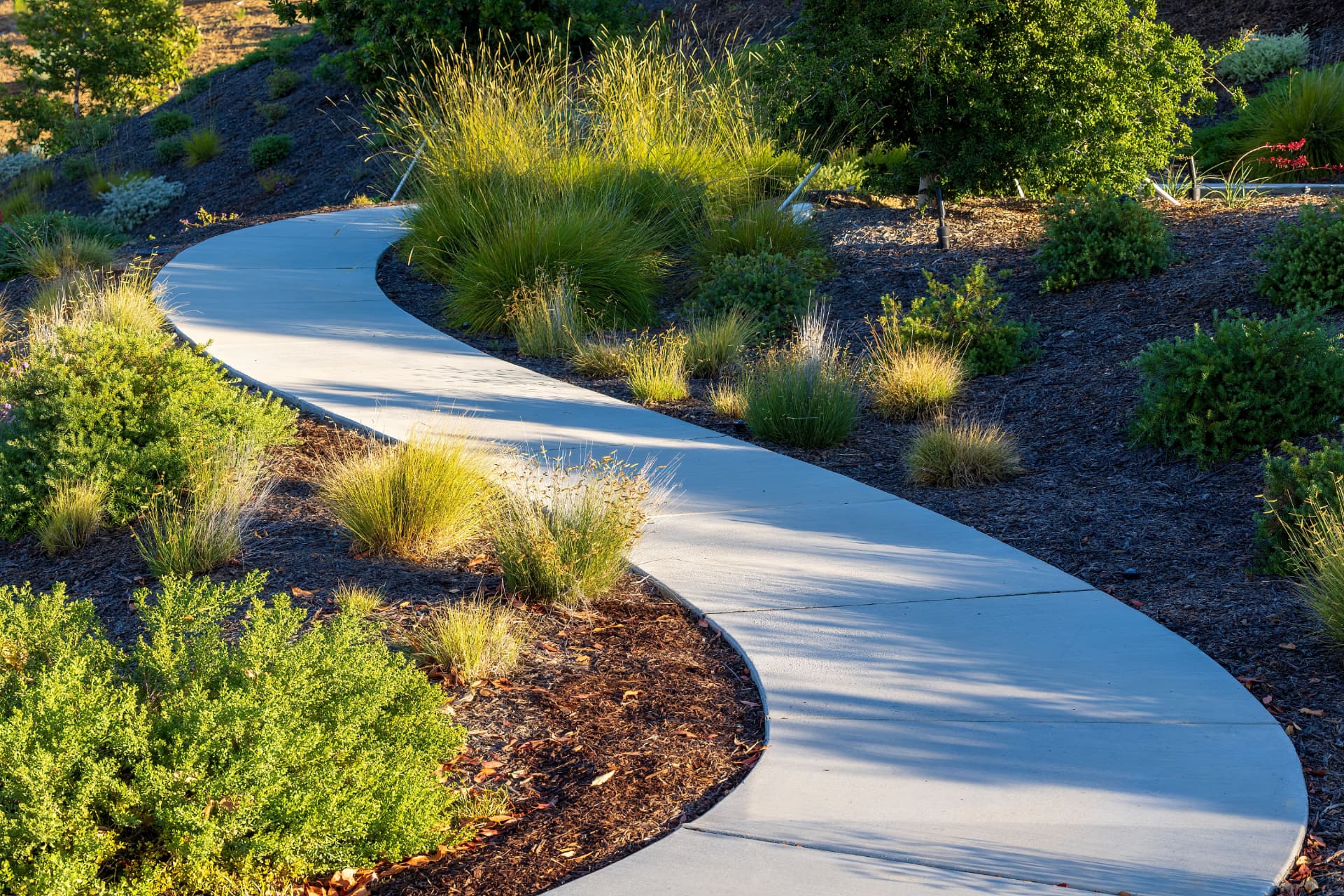
Walkways are the most inspected concrete on a property because people look straight down at them. Straight forms, consistent joints, and slope that actually sheds water are what separate a clean path from a trip hazard.
Most quotes back in 24 hours.
A clean walkway starts with a clean base. Drag the timeline to see the full sequence — mark, excavate, prep, form, steel, pour, finish, and strip.
The sidewalk route is staked or spray-painted so the line stays true to the plan.
Grass and soil are removed along the marked path to the correct depth and width.
The soil is graded and compacted so the slab sits on a firm, evenly supported bed.
Wooden forms are set and staked along both edges to hold the concrete to width and line.
Rebar or wire mesh is placed where the details call for it, kept up on chairs.
The forms are filled continuously while the crew spreads and works the concrete.
The surface is leveled, edged, control-jointed, and broom-finished for traction.
Forms come off and the clean, finished walk is left ready for foot traffic.
Front walks, side paths, and patio connectors with tooled or broom finishes.
Cross-slope, running slope, and landing dimensions built with accessibility requirements in mind.
Curb ramps, detectable warning placement, and thresholds tied to existing grade.
For HOAs and property managers we document panel elevations so uplifted panels can be tracked and replaced before they become a claim.
Panels sized so the joint lines look intentional and cracking is directed to the joints instead of the field.
Walkways get looked at more closely than any other concrete on a property, because people are staring straight down at them while they walk. Crooked forms, mismatched panels, ponding water and lipped joints all show immediately. Done well, a walkway just reads as clean and finished, and nobody has to think about it.
We install and replace concrete sidewalks and walkways in San Antonio for homeowners, HOAs, property managers and commercial sites. That covers front walks from driveway to porch, side yard paths, connectors between a patio and a gate, service walks around commercial buildings, public sidewalk sections, and curb ramps and transitions.
The functional side matters as much as the look. A walkway is a pedestrian surface, which makes uneven panels and standing water a genuine trip and liability concern — especially on rental, HOA and commercial property where somebody else is responsible for the person who falls.
Often handled alongside concrete driveway installation in San Antonio, concrete curbs and gutters in San Antonio and concrete flatwork and patio installation in San Antonio.
A continuous concrete surface with tooled joints and consistent panel elevations gives people a predictable place to walk, day or night.
People take the shortest route regardless of landscaping. A walkway on the line people actually use keeps mud out of the house.
Correct running slope, cross-slope and landing dimensions make a walkway usable with a walker, a stroller or a wheelchair — not just easier, but actually usable.
For HOAs and commercial sites, replacing lifted or spalled panels before they become a trip hazard is far cheaper than a claim.
A walkway that connects the drive, porch, gate and patio makes a yard feel planned rather than assembled over time.
Keeping joints sealed and water draining is essentially the entire upkeep list for a properly built walk.
We look at where people actually travel, where water runs, and where the walk needs to tie into existing concrete, then agree on width and path.
Linear footage, width, thickness, finish and any demo or ramp work, all priced in writing before we schedule.
Old panels are saw-cut and removed cleanly at existing joints, and the path is excavated to depth. Roots that caused the failure are addressed rather than paved back over.
Base material is compacted, then forms are set straight and to the right slope — enough cross-slope to shed water, not so much that it feels tilted underfoot.
Concrete is placed and finished, usually with a broom texture for grip. Edges are tooled and joints are placed so panel sizes look consistent along the run.
The walk is cured, forms are pulled, the area is cleaned up, and we confirm the transitions at both ends sit flush.
Walkways pay off most in the places people already walk. Before deciding on a route, look at the yard after a few weeks of normal use — the worn line in the grass is the honest answer about where the path belongs, and fighting it with landscaping rarely works.
Width is worth more thought than most people give it. A narrow front walk forces people to step off into the grass to pass each other. A wider walk, or a widened landing at the front door, changes how the entry feels and costs less than adding to it later.
Common walkway locations worth considering:
We install walkways for residential and commercial property in San Antonio, Alamo Heights, Terrell Hills, Boerne, Helotes, Schertz, Converse, Cibolo, New Braunfels and the surrounding communities.
In older neighborhoods, mature trees are the number one cause of walkway failure we see. Roots lift panels, panels crack, and the crack becomes a hazard. Replacement in those spots is about more than pouring new concrete — the root situation has to be handled thoughtfully so the tree survives and the new walk stays flat.
Sidewalks in the public right-of-way, and ramps at commercial entrances, may be subject to city standards or accessibility requirements. If your project touches either, we'll raise it during the estimate so it's addressed before the work starts rather than during an inspection.
Front walks are commonly built wide enough for two people to walk side by side comfortably, with an even wider landing at the door. We'll talk through width during the site visit based on your entry and how the walk gets used.
Often yes. Damaged panels are saw-cut out at the joints and replaced so the new concrete ties into what stays. Whether that's the right call depends on the condition of the surrounding panels and what caused the failure.
It's handled case by case. Options can include rerouting the path around the root zone, adjusting the panel layout, or root pruning where it's safe for the tree. We look at it on site rather than guessing.
We build walks, ramps and landings with accessibility requirements in mind, including running slope, cross-slope and detectable warning placement. On commercial projects we build to the specifications provided for the site.
Foot traffic is usually possible fairly quickly compared with vehicle traffic, but the exact timing depends on the mix and weather. We give you a specific time frame before we leave the site.
Almost always slope. Either the walk was poured flat, or a section settled after the fact. Correcting it means re-establishing the slope, which usually means replacing the affected panels rather than resurfacing them.
Tell us where the walkway needs to go or which sections are failing. We'll come out, measure the run, check the slope and drainage, and give you a written estimate for repair or new installation.
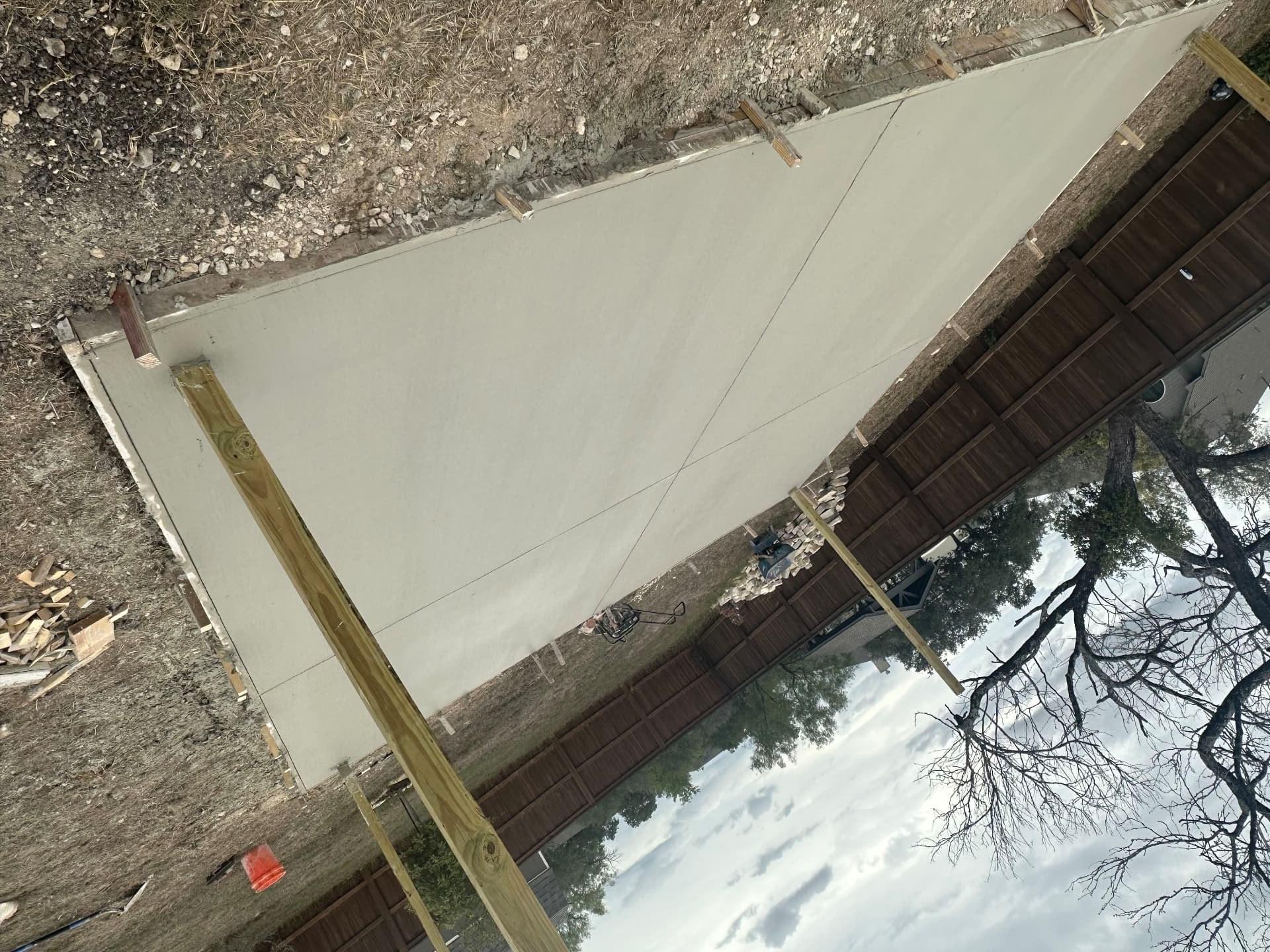
Tell us what you are building in the San Antonio area. We will walk the site, check soil, drainage, and access, and send a written scope you can actually compare against other bids.
Pick a time that works for you. We will come measure the site, check drainage and access, and send a written quote.