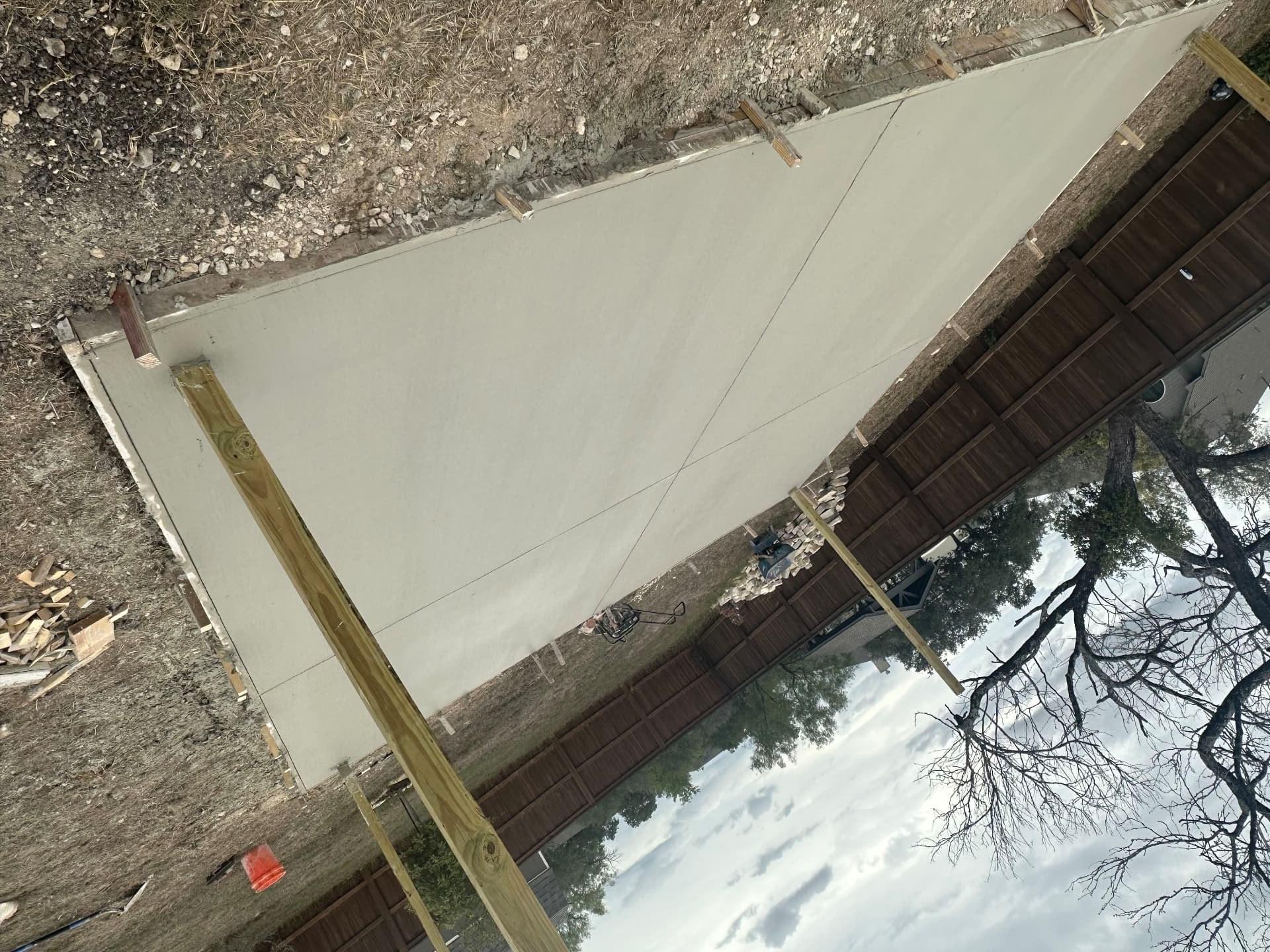
Prepare the Area
The patio or walkway area is excavated to depth, the base is compacted, and forms are set to the correct line and elevation.
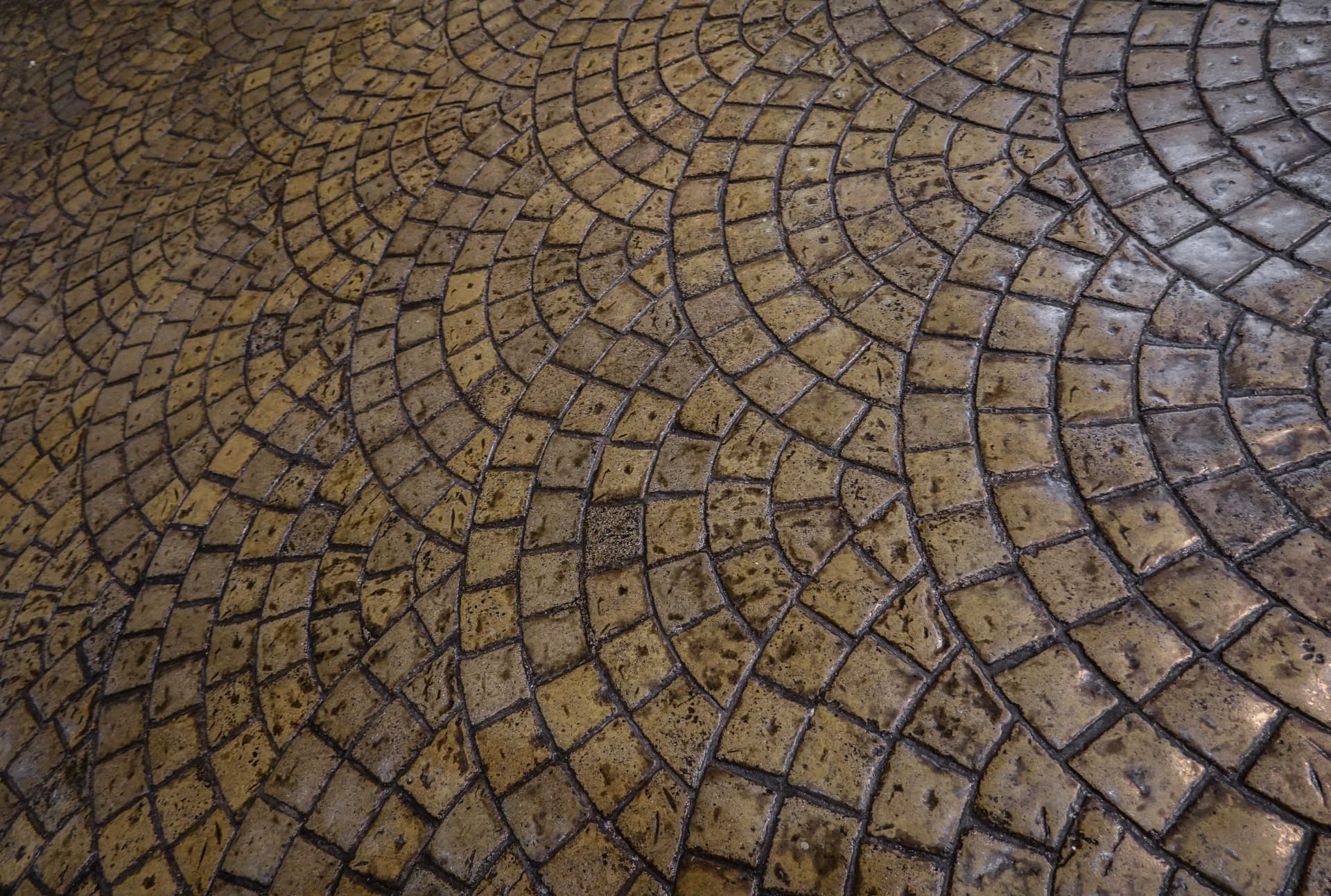
Decorative concrete is still structural concrete. The pattern and color are the last two hours of a job whose outcome was already decided by the base, the reinforcement, and the joint plan underneath.
Most quotes back in 24 hours.
Stamped concrete is still structural concrete first. The texture and color are the last steps, but the outcome depends on the base, steel, and pour that happen before the mats ever touch the slab. Drag the timeline to see the full sequence.
The patio or walkway area is excavated to depth, the base is compacted, and forms are set to the correct line and elevation.
Rebar or wire mesh is placed on chairs so the decorative slab has the structural support it needs underneath the texture.
Colored or standard concrete is placed continuously and worked across the formed area before it begins to set.
The surface is leveled and smoothed to a flat, consistent plane so the stamp pattern takes evenly across the slab.
Integral color and antiquing release agent are applied so the finished texture has depth and variation between highs and lows.
Textured stamp mats are laid out in the correct sequence so the pattern stays aligned across the entire pour.
Each mat is pressed, lifted, and advanced row by row so the texture imprints progressively across the fresh concrete.
Edges are finished, control joints are cut, and the surface is detailed before the concrete gets too firm to work.
Release agent is washed off and a protective sealer is applied to bring out the color and guard against stains and sun.
Forms are stripped to reveal a textured, decorative concrete surface that carries the look of stone without the joints failing.
Ashlar slate, seamless stone, and wood-plank stamps on patios, walks, and drives.
Color mixed in the truck plus antique release for depth that does not wear off with the surface.
Contrasting borders and scored patterns that break up large fields.
Sealer selection matched to sun exposure and traffic, with a plain-language schedule for resealing.
If a slab needs replacing, we say so. Stamping over a failing surface hides the problem for one season.
Stamped concrete gives you the look of stone, brick, slate or wood plank on a single continuous slab. There are no individual pieces to shift, no sand joints to refill, and no weeds coming up between units — but you still get texture, pattern and color instead of a flat gray surface.
We install stamped and decorative concrete throughout San Antonio for patios, pool decks, walkways, entries, driveways and decorative borders. Options include stamped patterns, integral color, color hardeners with antique release, saw-cut and scored designs, exposed aggregate, and contrasting bands that frame a broom-finish field.
The thing worth understanding before you start: decorative concrete is still structural concrete. The pattern and color happen in the last couple of hours of a job whose durability was already determined by the base, the reinforcement and the joint plan underneath. A beautiful stamp on a badly built slab is a beautiful slab that cracks.
Often handled alongside concrete flatwork and patio installation in San Antonio, concrete driveway installation in San Antonio and concrete repair in San Antonio.
Patterns replicate flagstone, slate, cobble, brick and wood plank without sourcing, cutting and setting individual units.
Unlike pavers, there's no joint sand to wash out and refill, and no gaps for weeds and ants to take over.
A single reinforced slab doesn't develop individual units that settle, rock or lift out of line over time.
Pattern, color, border and scoring can be tailored to match your home's stone, brick or tile rather than picking from a pallet of stock units.
Sweep, rinse, and reseal on a schedule. There's no re-leveling or re-sanding cycle.
A stamped border with a broom-finish field is a common way to get a decorative look on a driveway or large patio without doing the whole surface.
We look at samples against your home's stone, brick and trim, and talk through how the color will look once it's sealed and once it has weathered.
The estimate covers slab construction, pattern, color method, border details, sealer and joint layout, so you know what's included.
Excavation, compacted base, forms set to slope, and reinforcement placed on chairs. This part is identical to any good slab, because it has to be.
Concrete is placed and screeded flat, then color is applied — integral color from the truck, a color hardener worked into the surface, or both, plus release agent before stamping.
Mats are placed and tamped in sequence while the concrete is in the right window. Timing is the whole trick here — too early or too late and the imprint depth suffers.
Hand-detailing at edges and seams, control joints cut into the pattern lines where possible, then washing off release and applying sealer once the slab is ready.
The two decisions people most often revisit are color and sheen. A color that looks great on a small sample can read very differently across a large patio in full sun, and a high-gloss sealer that looks rich on install day can look slick and plasticky once it starts to wear. Looking at finished work outdoors, in daylight, is worth the time.
Traction matters more than appearance around water. Pool decks and any surface that will be walked on barefoot or wet should be specced with texture and a sealer chosen for grip, not just for shine. Tell us how the space will be used and we'll steer the finish accordingly.
Practical notes on stamped concrete:
We install stamped and decorative concrete in San Antonio and surrounding communities including Alamo Heights, Stone Oak, Boerne, Helotes, Bulverde, Schertz, Cibolo and New Braunfels.
Sun exposure drives a lot of the finish decisions in this area. Surfaces that catch full afternoon sun get hot, and darker colors get hotter — which matters on a patio or pool deck people use barefoot. We'll talk through color choice with the orientation of your space in mind.
Heat also affects the pour itself. Stamping has a working window, and in summer that window is short. Decorative pours get scheduled early in the day and staffed so the pattern goes in while the concrete is right, rather than rushed at the end of a hot afternoon.
It depends on the pattern texture and the sealer. Around pools and other wet areas we choose finishes and sealer products with traction in mind. Let us know how the surface will be used so it's specced correctly from the start.
Resealing frequency depends on sun exposure, traffic and the sealer used. We'll give you a maintenance recommendation for your specific installation and finish rather than a generic interval.
Overlays are possible on slabs that are structurally sound, but they aren't a fix for concrete that's cracking or breaking down. We'll evaluate the existing slab and tell you honestly whether an overlay makes sense.
Control joints are still necessary, but we place them along pattern lines wherever the layout allows so they blend into the design instead of cutting across it.
No. It's the same concrete with a textured surface. Cracking behavior depends on the base, reinforcement and joint spacing — the same things that determine whether any slab performs.
It costs more than a broom finish because of the additional labor, color and sealer, and the difference varies with pattern complexity and the size of the area. We price it per project so you can compare a stamped option against a plain or border-only option side by side.
Tell us what area you're finishing and the look you're after — stone, slate, wood plank or a simple decorative border. We'll come out, show you options against your home, and give you a written estimate.
Tell us what you are building in the San Antonio area. We will walk the site, check soil, drainage, and access, and send a written scope you can actually compare against other bids.
Pick a time that works for you. We will come measure the site, check drainage and access, and send a written quote.